There are two essential pages that you need to have on any personal branding website—an about page and a story page.
Riddle me this! Your target audience member stumbles upon your website and sees a snazzy picture of you. There you are offering some service, freebie, and/or magical potion. Now, the said target audience member is actually intrigued. He/she actually want to learn more about you! Where does that person go? … Yes, to your about page!
Your about page should provide a quick overview of who you are and why people should keep you in mind. This page should tell folks all about what makes you so special. That being said, you’ll also need a story page. This page is like the ultimate sidekick to your about page. This is where you’ll begin to breakdown your brand’s backstory. This is your moment to connect with your target audience on a deeper level.
If you haven’t done a SWOT analysis of your brand, you’re missing out on an opportunity to survey your brand and move further towards achieving your goals!
SWOT, a nifty little acronym, stands for your strengths, weaknesses, opportunities, and threats. When you take a moment to look at all these elements of your brand, you’ll be able to better position your brand in the marketplace. When in doubt, SWOT it out!
Relax, relate, and release! I’ll walk you through all steps in this video.
In all my chatter about brands, I realize that many people are still confused about what a brand really is. Pull the brakes! It’s time to go back to basics.
In this video, I take us back to fundamentals by describing and decoding what a brand really is. In a nutshell, a brand is everything people think of when you or your business is mentioned–for good or for bad! It is all about perceptions, people’s sense of you or your business. This video will walk you through the basics.
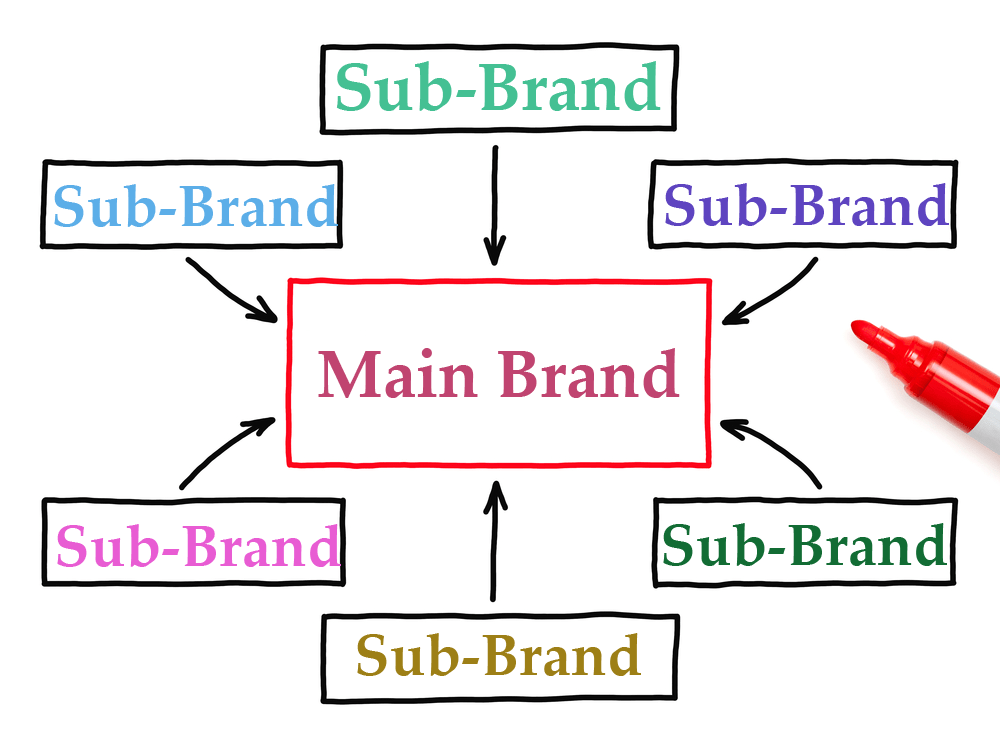
If you’re reading this post, your business or your personal brand may be at the stage in which you can scale and introduce a sub-brand(s). Congratulations! Before you debut your new efforts, there are several things to consider. I’ll show you the way through my 5 tips that you should use to create strong sub-brands.
1. Pinpointing The Personalities
Never, never forget your target audience. Is your sub-brand for the same group as your main brand, or is this an entirely different animal? If you’re unsure, revisit the needs in which your brand and sub-brands seek to address. Do they align, or are they completely different? This will indicate whether or not you’re serving the same groups of people.
Once you know your audience, you should use this information to shape your brand and sub-brand(s) personalities. The tone and feel of your sub-brand and brands will need to match its targets and should inform your marketing efforts. Consider this: Will the story for your sub-brand be the same, or have we entered a new genre?
2. Positioning The Product
Whether the sub-brand you are introducing is a product or a new venture for your personal brand, consider its relationship to your main brand. This is where a brand architecture comes into play. Much like an organizational chart, you need to decide if your sub-brand will complement your main brand or conflict with the ideals of your main brand. If your sub-brand jibes with your main brand, you can piggyback off of your main brand’s marketing campaigns. However, if your sub-brand is freestanding, you’ll need to distinguish it as such to avoid confusing your audience(s).
Separate But Equal
Case in Point: Clorox has a single brand that has extended into different categories, including bleach, toilet bowl cleaners, and disinfecting wipes. Since the main brand and sub-brands serve the same purpose, the message and sub-branding elements (logos, packaging, etc.) can remain the same or similar to the main brand to increase familiarity with the new product.
Another Case in Point: Honda prides itself in producing reliable vehicles and uses this as part of its main brand. It also has several sub-brands that tie-in with Honda, including the Civic and Accord. The sub-brands each offer different uses and shine on their own, but they still sit visibly under the Honda umbrella.
Different Strokes for Different Folks
There may be cases in which your sub-brand doesn’t connect with the main brand and needs to stand out on its own.
Case in Point: Disney is known for its family-friendliness. When the company decided to embrace edgier, R rated films, it introduced Touchstone. While Touchstone is still under the Disney wing, it is framed as its own entity, with a different audience, goal, and appeal than Disney.
Similarly, Proctor & Gamble is known to produce several, distinct sub-brands that don’t have any affiliation with one another. The line-up includes Old Spice, Gillete, and Pampers. The company proudly states on its website, “P&G is made of many individual brands, each serving customers in different ways—but all with a focus on making peoples’ lives a little easier.” There is the core P&G mission but the execution of these sub-brands are quite unique. Now, have you ever seen the Old Spice guy with pampers in hand? Ummmm, didn’t think so.
The right positioning of your sub-brand(s) will always enhance your main brand, whether this is through an intentionally visible relationship or solely through financial gains. ~ Renée Walker
3. Connecting or Disconnecting
Whether you decide to tie-in your sub-brand or differentiate it, there are a couple of ways in which you can strategically do so. You can use traditional marketing efforts, including the creation of unique names and messages for your sub-brands. Since visuals make an immediate impact, you can breed familiarity by leveraging your existing logo to create a new or complimentary icon. Although they may be seemingly insignificant, colors and fonts should be carefully considered in this process.
Case in Point: Apple Inc. The software giant has a line-up of its ever popular services that include the iPod, MacBook, and iCloud. The names of each item were obviously carefully considered when sub-branding. In addition, the sub-brands themselves work together to create cross pollination, also know as the Halo Effect. How many times have you heard of someone, connecting their iPod to their MacBook or downloading something from the iCloud to their MacBook? Each sub-brand proudly sports the Apple icon in addition to its own goal, but the promise and personality remains the same–Think Different.
4. Explaining The Experience
With the ability to launch sub-brands, it is important to explain the experiences that each division offers. This ensures that your audience does not become confused, and the right group is served. In addition, this strategy can introduce unintended audiences to your brand(s).
Case in Point: Toyota is yet another reliable car company with its own branding for a general audience, but when it decided to enter the luxury arena, the car company introduced its prestigious line of Porsche. Have you noticed that the Toyota commercials tend to feature families conducting everyday activities, while Porsche showcases apparently successful businessmen (yes, typically men) comfortably driving its exclusive vehicle? No, it is not a coincidence. It’s all an effort to distinguish the two brand experiences.
5. Diluting No, No
While sub-branding can help with entering a new category or introducing an extension, we must take care not to dilute the main brand itself. With all these lines and messages floating about, it is important not to have conflicting appeals and/or over saturation.
Case in Point: Armani. The fashion force has several sub-brands that include its entry level A/X and its exclusive Armani Black Label. This is just two of its multiple clothing lines, each one branded with complementary logos and its signature, classic appeal. However, in recent years, Armani’s push into the mid-priced market has been criticized for “eroding its luxury image,” no longer making it seem unique and causing the company to scale back its marketing efforts.
Word To The Wise
Sub-branding can be successful if done with foresight and careful planning. All members of your business or your personal brand’s team need to understand that consistency is necessary, whether it is for each individual brand or throughout your brand architecture. This will ensure that the right story is being told to the right audience with the right purpose. Got that … right?
A photo posted by reneewalkerpena (@reneewalkerpena) on
Is it a case of narcissism or is it just plain ol’ identity formation? However you define it, selfies have now become a part of our lives. Whether you or someone/some celebrity you know is engaging in it, at the very least you have heard the term before. Selfies are so omnipresent that they’ve found their way into the English Oxford Dictionary in 2013. Nary does a day go by when you won’t find your Instagram or even Facebook feeds filled with the homage to oneself: the Vogue-esk body angle, the dramatic head tilt, and well-rehearsed smile or smize are all the usual elements of the selfie.
When it initially gained steam a few years ago, I thought the selfie would become a quickly passing fad that would die hard. We would all look back the year after and tsk tsk our participation in the madness ala the word “bling,” but I was wrong! The selfie has taken on a life of its own, and as time goes on, it’s becoming normalized. There are now ways to incorporate successful selfie strategies into your marketing campaigns. What makes this style of photography so darn appealing? According to Psychology Today, selfies allow us to engage in the storytelling experience as both the subject and photographer. We get to become both the lead actor and director.
Self-ish v. Personal Branding
Millennials, aka what I like to deem as “Generation Me,” are often credited with giving birth to the selfie. They may actually have more pictures of themselves now than their parents even took of them as babies! But what’s the obsession?? For many of these young adults, teens, and even tweens it’s about self empowerment and/or esteem building. These self portraits also serve as a tool for chronicling a moment in time. Remember Ellen’s Oscar selfie in 2014? That moment in time reigned as the most re-Tweeted image, with more than 3.3 million shares, until 2016.
Regardless of the personal goal, the act of creating a selfie reinforces your personal brand. Selfies communicate your brand experience. They are a peek into who you are and what you stand for. It represents (or should represent) your authentic self, whether that is the intent or not. It gives social proof through the image itself and its popularity. The more likes, the better evidence you’ll have that your brand is working to build trust and credibility. Remember, people gravitate towards products and services that they trust, and pictures are found to increase trust, according to new research on increasing “truthiness.” Once you establish this relationship, you can reap the rewards found through sales.
Companies have caught on to the selfie trend and have been incorporating them into clever, low-budget, marketing campaigns. Most are based on having followers and/or customers post real photos of themselves with a product or embody a brand’s essence. Take notes, as these seven successful selfie strategies may also work for your marketing campaigns.
GoPro – Selfies are ideal for the photography industry. This seemed like a no brainer for GoPro, which created a viral marketing campaign by embracing the entertaining videos produced by its customers. While the effort began with the company’s partnership with extreme athletes, the company is now showcasing the works of its fans, which includes death-defying sky dives and bungee jumps. It’s user-generated content has yielded more than 3 million views and 3 million subscribers!
Strategy: Spotlight fans who embody your brand essence.
Dove’s campaign challenges traditional beauty standards.
Dove – The company continues to be consistently conscious. Sticking with its brand, Dove created the documentary #Selfie (2014) to showcase the unrealistic beauty standards young ladies face in a social media driven world. The 7-minute short encourages women to redefine these traditional beauty standards by becoming content creators.
Strategy: Use selfies to showcase your authenticity.
WIRED – Their February 2014 issue debuted with a unique spin. WIRED offered readers the opportunity to use an app that places them on the cover of its magazine. They also asked readers to them use the app to share the cover pic on social media, using #WiredGoesViral. Yes, you too could have been a cover girl/boy.
Strategy: Place your supporters front and center.
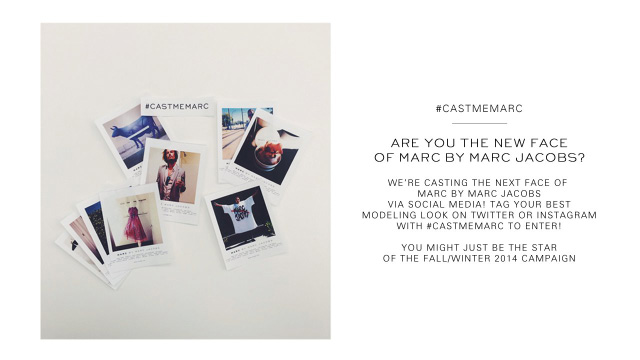
Marc, by Marc Jacobs – similar to WIRED, Marc literally sought out real people as models. Although the concept isn’t new (hello Banana Republic!) the designer’s execution was. His company created a casting call by asking fans to post selfies on Instagram and Twitter and tag them using #CastMeMarc. The campaign drew more than 70,000 applicants.
Strategy: Give back by showcasing your fans and their story.
Samsung – To promote its Samsung Galaxy S5’s water resistance feature, guess what the company did. Yep, you guessed it. The folks at Samsung embraced the underwater selfie, using divers in Lake Zurich to approach passersby with the S5 and entice them to join them in the lake for a chance at winning the phone. Strategy: Think outside the box to capture winning moments.
Beats – When debuting its Solo2 headphones, Beats used celebrities to take selfies of themselves going from one side of the headphone to the other. The images and videos were shared via Twitter and Instagram with hashtag #SoloSelfie, resulting in more than 9,000 posts.
Strategy: Use celebrities to ignite your audience’s support when possible.
Nokia Lumia 735 – The smartphone company launched “The Selfie Collection” as a means of using a “selfish” act to support an unselfish cause. The campaign featured self-taken images of famous Scandinavian fashion bloggers using the Lumia 735. The bloggers also donated a fashion item for an auction to support the fight against online bullying.
Strategy: As an alternative to celebrities, partner with digital superstars who can vouch for you.
The New Normal
Do I now have you convinced that there’s a method to all this madness?
If not, here’s one more attempt that showcases pop culture at its finest. Grab your selfie stick and enjoy the #Selfie song. Never gets old!
We use cookies to ensure that we give you the best experience on our website. If you continue to use this site we will assume that you are happy with it.